










Evaluating Ehud Olmert’s Remarks On The Gaza Conflict

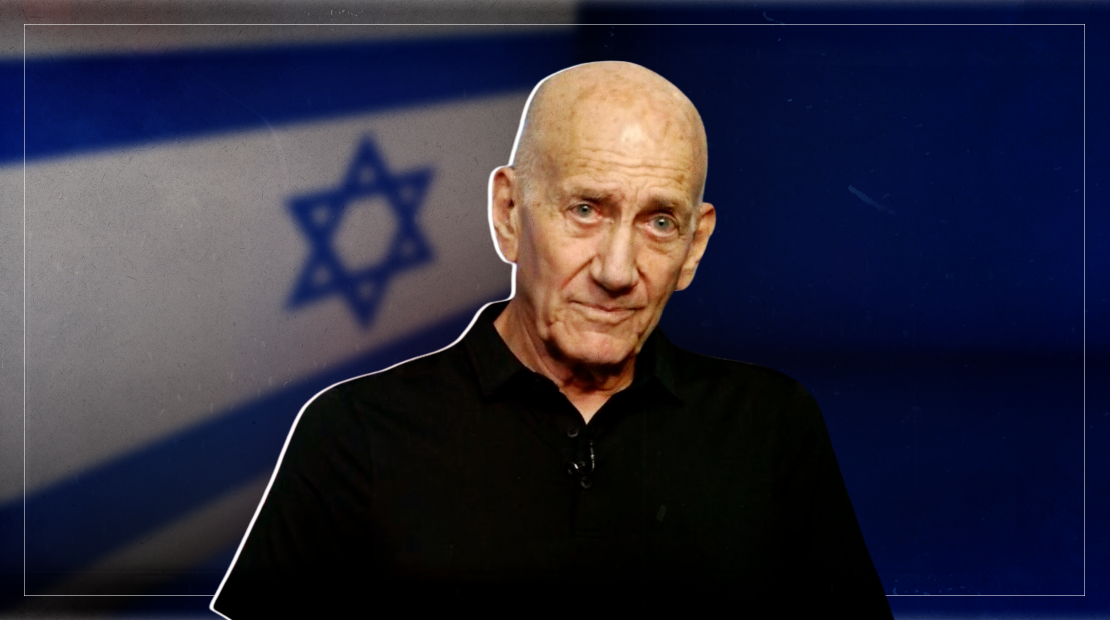
Table Of Contents
Ehud Olmert has raised several questions regarding the alleged war crimes on Palestinian soil in recent times.
Additionally, he has raised serious concerns about the current Netanyahu government’s intentions in Israel.
The former Prime Minister has, moreover, stated that the actions taken by the IDF no longer constitute a war against Hamas.
Thus, people should consider it a full-fledged political campaign driven by Prime Minister Benjamin Netanyahu.
Olmert has also raised questions about comments and actions taken by the Israeli government that involve depriving the Palestinian population of basic humanitarian needs, including the restriction of essential aid.
This article seeks to evaluate the remarks made by the former Prime Minister of Israel. It also analyzes the issues discussed on Piers Morgan Uncensored in relation to these statements.
War Crimes Internationally Ignored
People from all over the world have interpreted the news of war crimes in Gaza in various ways. Hence, this section examines how allegations of war crimes in Gaza have been received globally.
This section also explores why international responses have been widely viewed as insufficient or inconsistent.
Allegations of Atrocities in Gaza
Press reports show that the atrocities committed by Israel in Gaza include charges that the Israeli state has been killing children in the name of counterterrorism. Despite the seriousness of these allegations, the international community has shown significant negligence on the issue.
Interviews and discussions place emphasis on the complexity of the two-state solution. Thus, people often tend to ignore matters related to the interests of the Palestinian victims.
The interview clearly shows that these atrocities are nothing new. Instead of reaching concrete solutions, discussions continue to raise more questions.
We have tried to examine the statement by the former Prime Minister from multiple angles. We have found out various emerging perspectives regarding the Israel–Hamas conflict.
People also increasingly discuss Israel from a genocide perspective. However, the Israeli officials frame these actions as anti-terrorist measures.
What Did The Of Israeli Leadership Say About The Claims Of Killing Children
The Israeli side has denied the claims of killing Palestinian children. Thus, this section outlines the official position of Israeli leadership regarding civilian casualties. It also highlights how these claims are challenged during public discourse.
1. Official Position Of The Israeli Government
Israeli officials clearly state that the Israeli state does not pursue its political goals through the killing of children. The government claims that the cabinet unanimously decided to focus operations on Gaza while excluding Hamas as a civilian entity.
Piers Morgan argues that Israel appears to be doing more than fighting a war, suggesting that the campaign lacks a clear purpose.
2. Claims Of Honoring Civilian Lives
The Israeli Prime Minister has stated that although efforts were made to eliminate Hamas in Gaza, civilians were honored and not deliberately targeted.
Lack of Action to Stop Violence
This section focuses on the perceived failure of international and regional actors to meaningfully intervene. It also examines how continued violence has led to escalating civilian casualties.
1. Rising Civilian Casualties
Surrounding nations have taken little effective action to stop violence, with diplomatic responses failing to match the scale of the crisis. Piers Morgan questions conflicting casualty figures, suggesting that the number of innocent people killed may be closer to 25,000 rather than 50,000.
He repeatedly adds that even after condemning Hamas, the killing of civilians and children continues. Estimates suggest that casualties exceed 15,000, indicating that continued attacks alone cannot be considered a solution.
2. Humanitarian Crisis And Military Justifications
Piers again accuses the Israeli defense forces of killing innocent people through sustained bombing campaigns. Israel counters these accusations by arguing that Hamas operates while hiding among civilian populations.
The humanitarian crisis is also discussed. The Israeli defense claims that humanitarian aid is being provided. However, Piers points out that certain Western human rights narratives have adopted selective or misleading propaganda to gain sympathy.
International Journalists Blocked From Gaza
This section addresses concerns related to media access and information control. Furthermore, the section highlights the allegations of several restrictions. The Israeli side has allegedly imposed limits on independent verification of events.
Concerns Over Media Access and Transparency
Piers Morgan focuses on the accusation that restrictions on journalists are not related to safety but are instead an attempt to prevent the collection of actual events on the ground. He accuses the Israeli government of hiding the truth behind the mass killing of journalists.
It is further stated that the number of journalists killed during this conflict surpasses that of any other war in history.
Hostages Taken By Hamas
This section discusses the hostage crisis and its role in prolonging conflict. It also explores competing narratives around negotiations and prisoner exchanges.
Prisoner Exchange and Negotiation Deadlock
The bargaining stance is discussed with direct reference to the Palestinian community and the atrocities carried out against Israelis. Many argue that the release of hostages could bring the war to an end, though confusion remains regarding how many hostages are civilians versus soldiers.
It is stated that around 10,000 Palestinian prisoners are currently being held. Piers argue that Mustafa Barghouti supports an exchange arrangement. Barghouti has reportedly treated the hostage issue seriously. Thus, they have prepared to release all hostages. The Israeli Netanyahu government’s hardline approach has created multiple complications.
Security Of Palestine And Gaza
During the conflict between Israel and Palestine. Hamas captured several hostages. Thus, the political enthusiasts should also consider the plight of the hostages in this conflict.
1. Collapse of Gaza’s Civil and Economic Structure
Observers describe Gaza as being under severe distress. The war has destroyed the economy of Gaza. Further, the recent bombardments have reportedly killed approximately 2,000 children. Additionally, the IDF forces control the Border security tightly.
Israel has dropped more explosives on Gaza than those used in Hiroshima. This bombing has resulted in widespread destruction.
2. Aid Control And Competing Narratives
Israel controls aid access, and the entry of food remains minimal. Critics have heavily criticized the IDF for the killing of children.
Piers highlights references to British historian Andrew Roberts, who claims that documentation from Gaza shows civilians were bombarded. It is further argued that this represents the lowest ratio of terrorism-related casualties ever recorded, though debates continue over the classification of civilians and children as combatants.
Authorities also suggest that the Israeli cabinet remains concerned about ending the war, though no clear or unified response has yet emerged.
The Big Jar Take On The Comments Made By Ehud Olmert
This concluding section reflects on the broader significance of internal Israeli criticism. It frames Olmert’s remarks as a warning rather than a rejection of security concerns.
Notably, Ehud Olmert’s remarks stand out due to their origin within Israel’s political establishment. The former Prime Minister has questioned the legality and intent of an ongoing military campaign. Furthermore, he has raised deeper institutional concerns.
Consequently, the political enthusiasts from around the world should not dismiss such criticism as a mere ideological bias. Instead, it shifts attention toward accountability.
Importantly, Olmert argues that Israel’s actions in Gaza no longer resemble a focused war against Hamas.
Further, the Prime Minister described the campaign as being politically driven by Prime Minister Benjamin Netanyahu and his cabinet. Thus, the interests of the Prime Minister and his cabinet play a major role.
Thus, the current government keeps the interests of the political stakeholders above the interests of Israelis.
Hence, people should not ignore this distinction. People should judge the Military campaigns not only by objectives, but also by the limits they observe.
However, the eroding limits cause civilians to suffer foreseeably.
Furthermore, Olmert raises concerns about humanitarian aid policies. When leaders discuss deprivation publicly, the issue moves beyond collateral damage.
Meanwhile, the global discourse prioritizes complexity. Hence, several vigilant global citizens raise various critical questions. The most important question among them remains “What happens when internal warnings are ignored?”